logo Pediatric Hearing Care

Giving Your Child
the Gift of Sound

Cochlear implants have transformed the lives of hundreds of thousands of children worldwide. Here's what every parent should know.

Learn More ↓
CI

Not a hearing aid — something fundamentally different

A hearing aid makes sound louder. A cochlear implant bypasses damaged hair cells in the inner ear entirely and sends electrical signals directly to the auditory nerve — giving the brain access to sound that no hearing aid can provide for children with severe to profound hearing loss.

The device has two parts: a small internal component placed during surgery, and an external sound processor worn behind the ear.

Electrode array activating Auditory Nerve
6–12
Months — earliest recommended age for implantation
90%+
Of early-implanted children attend mainstream schools
~1hr
Average surgical duration — typically same-day discharge

Is your child a candidate?

Candidacy is determined through a structured evaluation process. Children who may benefit typically meet one or more of the following profiles:

👶
Infants & Toddlers
Children as young as 6–12 months with confirmed bilateral severe-to-profound sensorineural hearing loss. Earlier is almost always better.
🔈
Limited Benefit from Hearing Aids
Children who have trialled well-fitted hearing aids for 3–6 months with insufficient progress in spoken language development.
🧠
No Excluding Medical Conditions
An intact auditory nerve and absence of conditions that would prevent surgery or rehabilitation are key prerequisites.
👨‍👩‍👧
Family Commitment
Success requires consistent post-implant therapy and family engagement. This is a team effort — not just a surgical procedure.

What does the process look like?

Step 01
Comprehensive Evaluation
Audiology testing, imaging (CT/MRI), speech assessments, and medical clearance. Takes several weeks. This step determines if your child is a candidate.
Step 02
Surgery
An approximately 1-hour procedure under general anaesthesia. The internal device is placed under the skin behind the ear. Most children go home the same day or within 24 hours.
Step 03 — ~4 Weeks Post-Op
Activation ("Switch-On")
The external processor is fitted and turned on for the first time. Sound sensation begins — but it takes time for the brain to learn to interpret it. Manage expectations: this is a process, not an instant transformation.
Step 04 — Ongoing
Auditory Rehabilitation
Regular mapping (processor tuning), speech therapy, and family involvement are essential. Progress is measured in months and years, not days.

What can parents realistically expect?

🗣️
Spoken Language Development
Most early-implanted children develop age-appropriate spoken language with consistent therapy and family support.
🏫
Mainstream Education
The majority of implanted children attend regular schools without specialist hearing support classes.
⏱️
Results Vary — Timing Matters
Outcomes depend heavily on age at implantation, therapy consistency, and parental involvement. Earlier implantation consistently yields better language outcomes.
🎵
Music & Complex Sound
Many children can enjoy music and distinguish complex sounds, though this varies. Technology continues to improve year on year.

Is it safe?

Cochlear implantation is a well-established, low-risk surgical procedure with decades of clinical evidence behind it. Risks exist, as with any surgery, and must be discussed openly with your care team. These include anaesthesia risks, infection, and — rarely — device failure.

FDA-approved since 1990 Decades of global clinical data 700,000+ worldwide recipients Ongoing specialist follow-up included Paediatric anaesthesia-safe

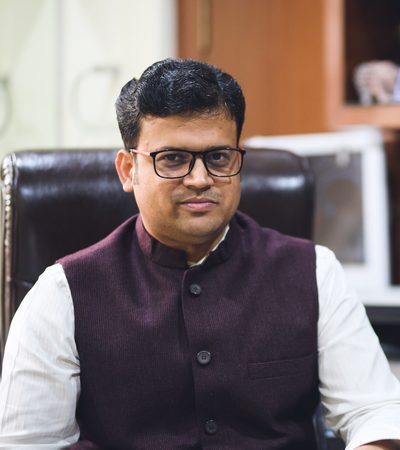
Meet the Specialist

Dr. Rahul Agrawal
Dr. Rahul Agrawal
MBBS  ·  DLO  ·  DNB (ENT)
400+
Cochlear Implant Surgeries
in Children & Adults
2009
Year of first CI surgery
at AHRI, Gwalior
16+
Years of dedicated
cochlear implant practice
✓ Zero Major Surgical Complications

A Track Record Built on Precision & Care

Dr. Rahul Agrawal established the Cochlear Implant Programme at Agrawal Hospital & Research Institute (AHRI), Gwalior in 2008 and performed his first cochlear implant surgery in 2009. Since then, he has completed more than 400 cochlear implant surgeries in both children and adults — with zero major surgical complications to date.

He has hands-on experience with implants from all major global manufacturers:

Advanced Bionics Cochlear MED-EL Oticon Neubio

Training Programmes

Dr. Agrawal conducts annual hands-on Basics of Cochlear Implant Workshops at AHRI, Gwalior — training ENT surgeons from across India.

Hospitals He Has Mentored

  • NSCB Medical College, Jabalpur
  • Primus Hospital, New Delhi
  • Fortis Hospital, Vasant Kunj
  • ORL International Hospital, Delhi
  • We Care Hospital, Rohtak
  • Vardhman Hospital, Bhopal
  • Guru Nanak Hospital, Mumbai

Selected Invited Talks & International Training

  • ISOCON 2024 — "Cochlear Implant: Made Easy to Plan It", Indian Society of Otology Annual Conference, Agra
  • AOI MP State Chapter 2023 — Invited Talk on Cochlear Implant Surgery, Bundelkhand Medical College, Sagar
  • AIIMS Patna 2020 — "Improving Results of Cochlear Implant Surgery", Neuro-otological & Equilibriometric Society Annual Conference
  • Leiden University Medical Center, Netherlands 2018 — International Advanced Course: Imaging Aspects of Cochlear Implantation
  • 6th Munich Hearing Implant Symposium 2018 — Munich, Germany
  • MED-EL Surgical Academy 2019 — Innsbruck, Austria
  • Cochlear Surgeons Workshop 2017 — Australia
  • MPENTCON 2025 — Panelist, "Difficult Situations During Cochlear Implant Surgery", Bhopal

Book a Consultation

Don't wait for clarity to come to you. Reach out today — early evaluation is the single most important step you can take for your child.

🏥
Agrawal Hospital & Research Institute

H 204, Madhav Nagar
Gwalior, Madhya Pradesh
India